Arsip

  • Lectio: Journal of Language and Language Teaching | September 2026 Issue
    Vol 6 No 2 (2026)

    The current issue of LECTIO: Journal of Language and Language Teaching brings together scholarly works that examine contemporary developments in English language teaching, learning, and assessment across diverse educational contexts. The contributions explore the integration of emerging technologies, innovative instructional strategies, communicative approaches, and alternative assessment practices to address the evolving needs of language learners. Particular attention is given to the use of Artificial Intelligence in English language teaching, structured approaches to developing writing performance, task-based instruction for enhancing speaking fluency and addressing speaking anxiety, authentic and model-based approaches to language assessment, and literary learning models that promote students’ critical thinking. Collectively, these studies reflect current directions in English language education that emphasize meaningful language use, learner engagement, higher-order thinking, and the integration of innovative pedagogical practices. By bringing together empirical research, systematic literature reviews, and conceptual frameworks, this issue highlights the continuing development of evidence-based approaches to English language teaching and learning. It further reflects LECTIO’s commitment to promoting research that connects pedagogical innovation with the changing demands of contemporary language education in both local and broader educational contexts.

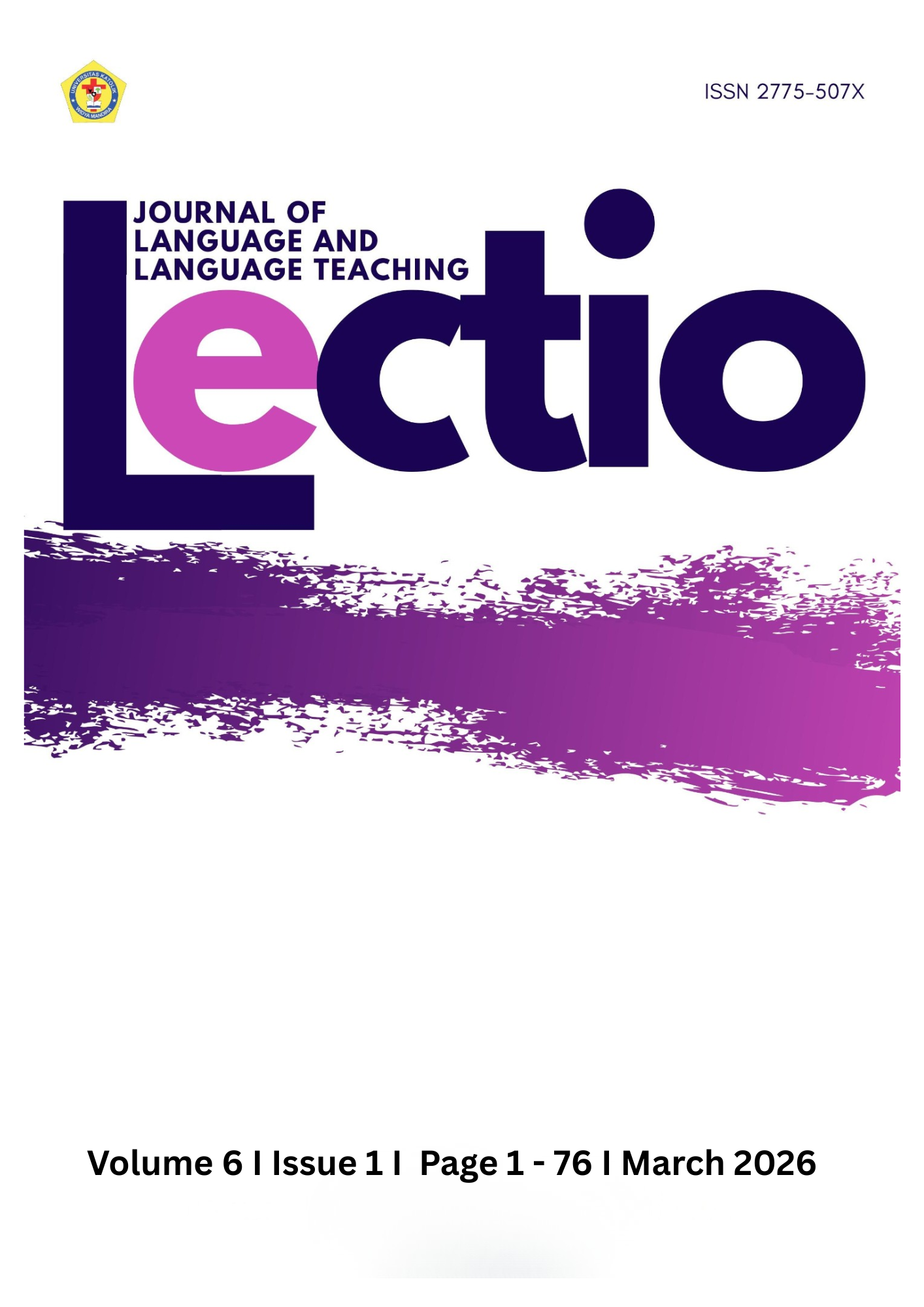
  • Lectio: Journal of Language and Language Teaching | March 2026 Issue
    Vol 6 No 1 (2026)

    The current issue of LECTIO: Journal of Language and Language Teaching proudly brings together scholarly works that examine language from cognitive, pragmatic, and pedagogical perspectives within contemporary linguistic inquiry. The contributions in this edition explore how language is processed, represented, and interpreted, while also addressing its implications for teaching and learning in diverse contexts. By integrating theoretical discussions, systematic reviews, and discourse-based analyses, the articles collectively highlight the dynamic relationship between cognition, meaning-making, and instructional innovation. This issue reflects LECTIO’s ongoing commitment to fostering rigorous research that bridges linguistic theory and educational practice in both local and global settings.

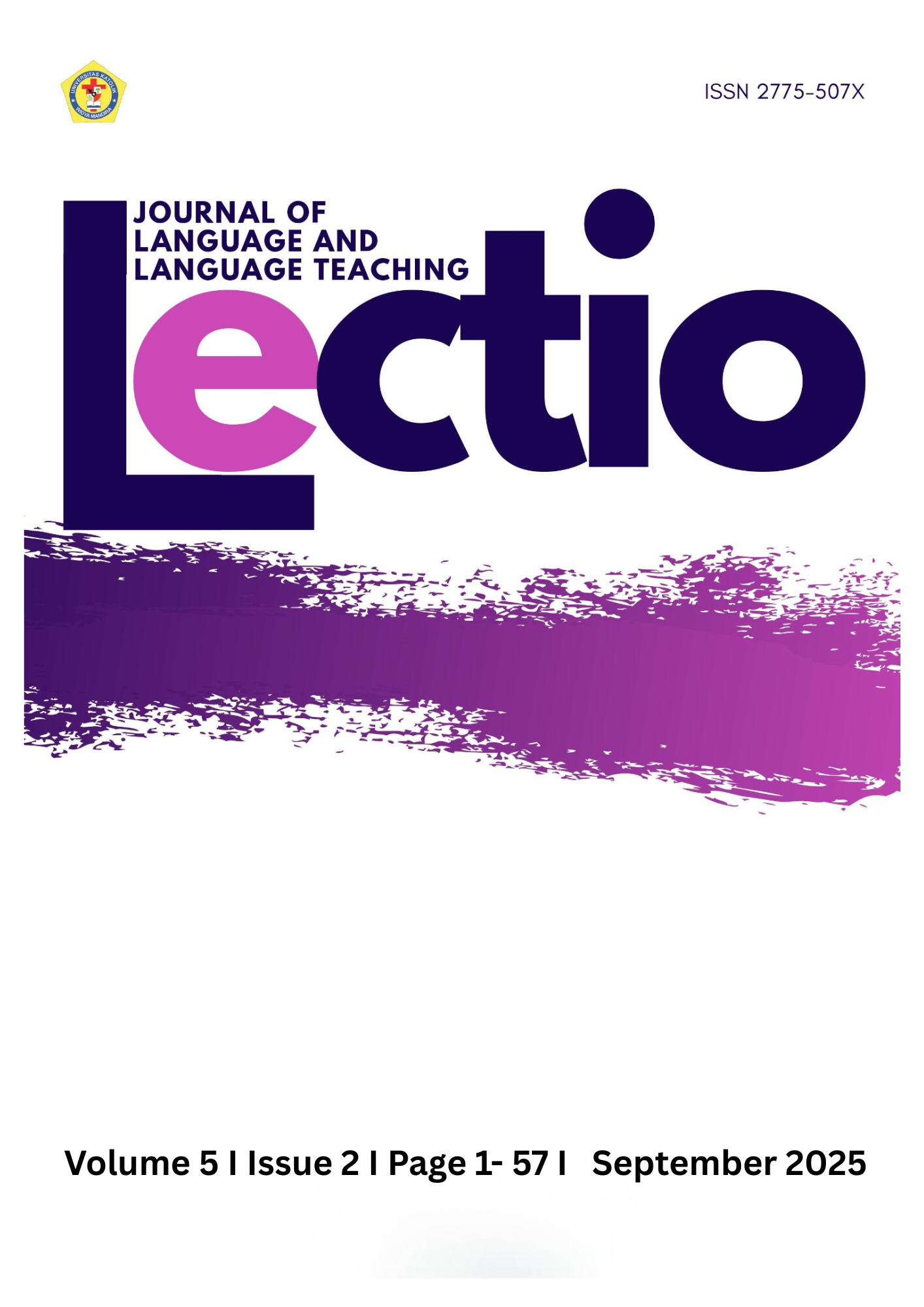
  • Lectio: Journal of Language and Language Teaching | September 2025 Issue
    Vol 5 No 2 (2025)

    This issue of LECTIO: Journal of Language and Language Teaching brings together studies spanning English language teaching, applied linguistics, translation, and the study of language in society. On the pedagogical side, the contributions examine secondary school students’ perceptions of, enjoyment of, and satisfaction with mobile devices for learning English, and analyse the grammatical errors junior high school students make when writing simple English sentences. Other studies turn to language in media and culture: an investigation of how Generation Z perceives the communication styles that build relatability in podcast media, an analysis of the translation strategies used in the Indonesian subtitles of Netflix films from the perspective of audiovisual pragmatics, and a literature review on the role of language as a social and cultural institution. Collectively, the issue shows how both classroom-based evidence and everyday media texts can inform language teaching practice and a broader understanding of how language functions in social and cultural life. It reflects LECTIO’s commitment to research that bridges pedagogical concerns with wider linguistic and cultural inquiry.

    e-ISSN: 2775-507X

  • Lectio: Journal of Language and Language Teaching | March 2025 Issue
    Vol 5 No 1 (2025)

    This issue of LECTIO: Journal of Language and Language Teaching presents studies that apply linguistic and discourse-analytic frameworks to a wide range of texts, from learner writing and popular music to cultural tradition and political speech. The contributions include a Systemic Functional Linguistics analysis of a student’s narrative writing, a qualitative study of the idiomatic expressions in Taylor Swift’s album Midnights, an examination of the Begepen tradition of the Odung Baoraja tribe as a symbol of peace and a means of strengthening national identity, and a critical discourse analysis of Volodymyr Zelenskiy’s address to the UK Parliament based on Fairclough’s three-dimensional model. Taken together, these studies show how close attention to language can reveal the ways meaning, identity, and power are constructed in educational, cultural, and political settings. The issue reflects LECTIO’s commitment to research that connects rigorous linguistic analysis with its implications for language education and for a deeper understanding of language in society. 

    e-ISSN: 2775-507X

  • Lectio: Journal of Language and Language Teaching | March 2021 Issue
    Vol 1 No 1 (2021)

    Lectio: Journal of Language and Language Teaching, Volume 1, Number 1, year 2021, presents five articles on language and language teaching. 

    e-ISSN: 2775-507X